

Cultivated meat is reshaping how we think about food. It’s real meat, grown from animal cells without slaughter, offering a new way to enjoy protein while addressing ethical and environmental concerns. In the UK, interest is climbing, with regulatory programmes and milestones like the first cultivated meat product for pets hitting shelves in 2025. Here are five key founders driving this change:
- Uma Valeti (Upside Foods): Created the first cultivated chicken and duck, leading FDA and USDA approvals in the US.
- Josh Tetrick (Eat Just/GOOD Meat): Brought cultivated chicken to market in Singapore and the US, partnering with Michelin-starred restaurants.
- Bruce Friedrich (The Good Food Institute): Advocates for industry-wide research and policy to make cultivated meat more accessible.
- Mark Post & Peter Verstrate (Mosa Meat): Introduced the world’s first cultivated beef burger and drastically reduced production costs.
- David Bell (Cultivated Meat Shop): Focuses on consumer education and preparation for cultivated meat’s market entry.
These pioneers are advancing cultivated meat production, regulatory readiness, and consumer awareness, paving the way for a future where meat is produced without animal farming.
The Future of Meat Is Here | Uma Valeti x Rich Roll
sbb-itb-c323ed3
1. Uma Valeti – Upside Foods
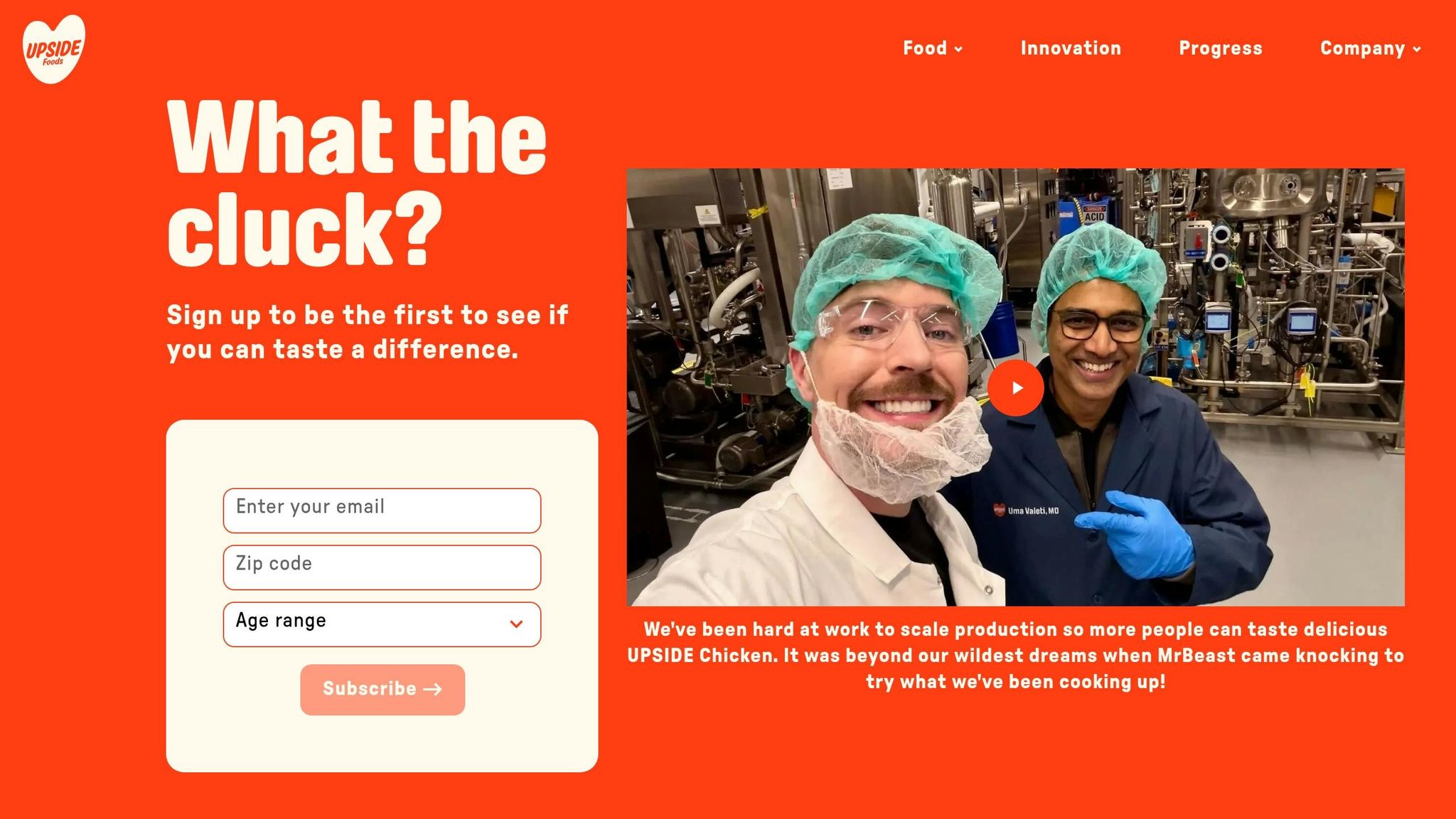
Growing up in India, Uma Valeti experienced a moment that would shape his life's work. At a birthday celebration, he witnessed a stark contrast: joy and festivity in one area and the harsh reality of animal slaughter in another. This experience profoundly influenced his vision for ethical meat production.
"It was really hard for me as a 12 year old kid to come up directly face to face with that duality of how meat comes to the table, where there was intense happiness in the front celebrating a birthday. And then intense sadness and suffering in the back with the death day." – Uma Valeti, CEO and Founder, Upside Foods [4]
Valeti, a trained cardiologist with experience at the Mayo Clinic and Stanford University, saw a connection between his work in stem cell research and the potential to create meat without harming animals. By 2015, he founded Memphis Meats, which later rebranded as Upside Foods in 2021, to better reflect its commitment to sustainable and cruelty-free meat production. This marked the start of a groundbreaking journey in cultivated meat.
Under Valeti's leadership, the company achieved several major milestones. By 2017, they had successfully produced the first cultivated chicken and duck. In November 2022, Upside Foods became the first company to receive FDA safety approval for cultivated meat, followed by USDA clearance in June 2023 [5]. Shortly after, acclaimed three-Michelin-star chef Dominique Crenn served the product at her San Francisco restaurant, Bar Crenn, further validating its quality and appeal.
"When I tasted it, I was like... okay, this is the future. I love UPSIDE." – Chef Dominique Crenn [3]
Upside Foods has raised over £470 million in funding, including a record-breaking £315 million Series C round in 2022 [4]. Its state-of-the-art 6,500m² EPIC facility in Emeryville, California, uses 2,000-litre cultivators to produce around 22,700 kg (50,000 lb) of meat annually. Between 2023 and 2024, the company scaled its production by an astonishing 1,000x [4]. While currently focused on the U.S. market, these regulatory achievements pave the way for potential approvals in the UK and Europe [1].
"The field has already moved from being impossible to possible and now from possible to inevitable is the journey to scale." – Uma Valeti, CEO and Founder, Upside Foods [4]
2. Josh Tetrick – Eat Just and GOOD Meat
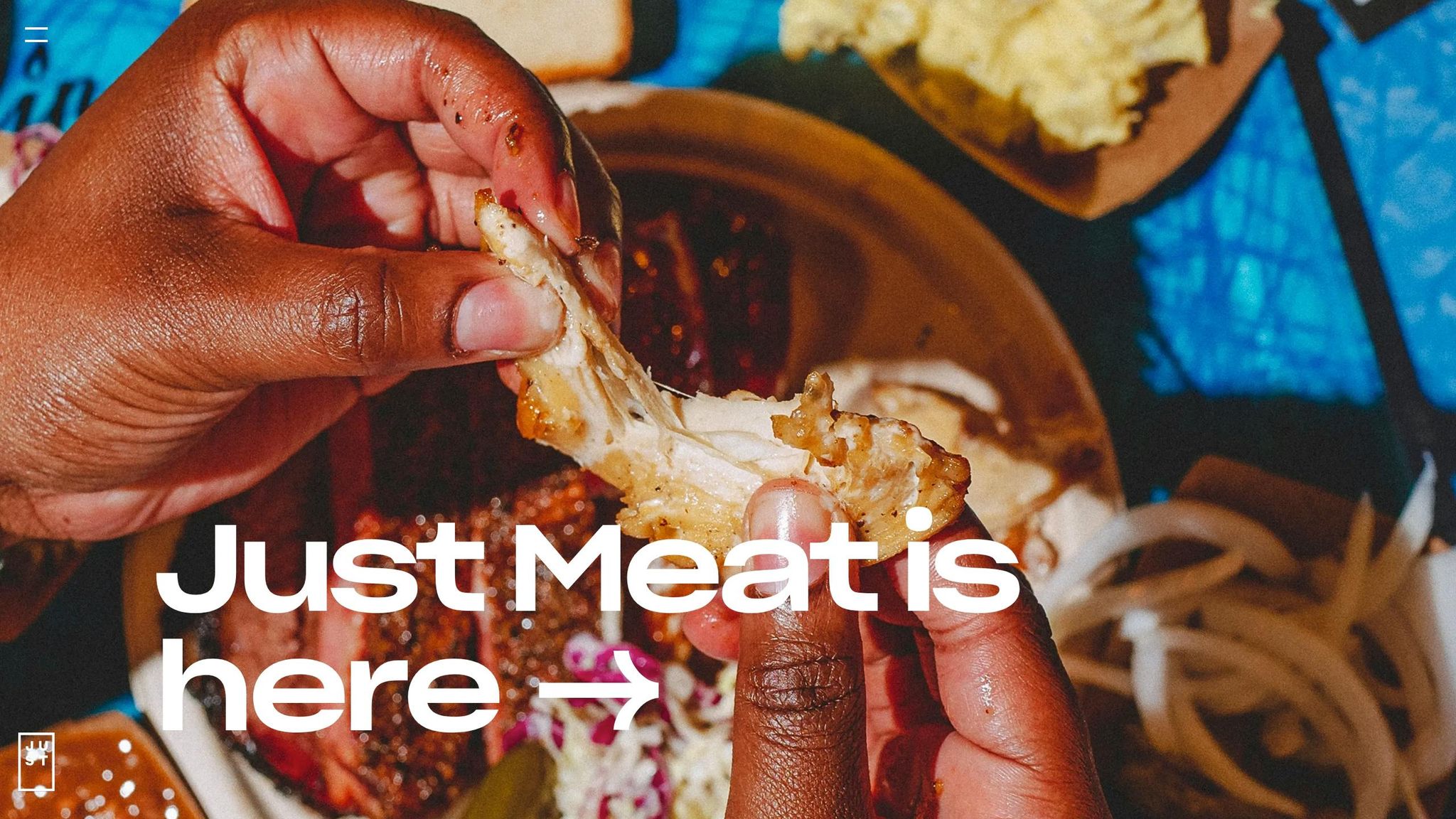
Josh Tetrick, the driving force behind Eat Just and its cultivated meat division, GOOD Meat, is on a mission to prove that meat production doesn't have to come at the cost of animal lives. Inspired by Uma Valeti's groundbreaking work, Tetrick has championed a vision of ethical meat production, famously stating:
"I don't think we need to kill another [animal] to have dinner with our friends and family." – Josh Tetrick, CEO, Eat Just [6]
GOOD Meat made history in November 2020 when Singapore's Food Agency granted it the first-ever regulatory approval for cultivated meat. Shortly after, the company served its first commercial sale of cultivated chicken nuggets at restaurant 1880 in Singapore [8].
The momentum continued in the United States, where, in June 2023, GOOD Meat received a grant of inspection from the USDA - the final hurdle before commercial sales. To further build consumer confidence, the company brought Michelin-starred chef José Andrés onto its board. Andrés has pledged to serve cultivated chicken in his restaurants, adding a culinary stamp of approval to the product [5].
"This announcement that we're now able to produce and sell cultivated meat in the United States is a major moment for our company, the industry and the food system." – Josh Tetrick, Co-founder and CEO of GOOD Meat and Eat Just [5]
Despite these achievements, Tetrick acknowledges the challenges that lie ahead. Surveys indicate that while two-thirds of consumers are open to replacing traditional meat with cultivated alternatives, and 88% of testers have responded positively, scaling production remains a significant task. The company is transitioning from 1,000-litre to over 100,000-litre bioreactors. With US$440 million (around £347 million) in funding and a strategic partnership with PHW Group - one of Western Europe's largest poultry producers - GOOD Meat is laying the groundwork for entry into the UK and EU markets [7] [8].
3. Bruce Friedrich – The Good Food Institute
Bruce Friedrich, co-founder and President of The Good Food Institute (GFI), is shaping the future of Cultivated Meat by focusing on the broader political, scientific, and economic framework needed for the industry to thrive. Unlike many founders who centre their efforts on product development, Friedrich is working to create the conditions for long-term success across the entire sector.
Since co-founding GFI in 2016, Friedrich has consistently argued that using crops to feed animals for meat is inefficient, harmful to the environment, and unnecessary. His 2019 TED Talk, which has garnered over 2.3 million views and been translated into more than 30 languages, highlights the growing interest in his message , showing how public campaigns support cultivated meat awareness[9].
"Using vast quantities of crops to feed animals, rather than people directly, is an inefficient and environmentally damaging way to produce food." – Bruce Friedrich, President, The Good Food Institute[10]
Friedrich believes that moral arguments alone won't shift global eating habits. Instead, he says the real turning point will be when Cultivated Meat matches traditional meat in both taste and price. He points to Mosa Meat's Cultivated Meat burger as a sign of progress, noting that its production costs have plummeted by an astonishing 99.999% since the initial prototype in 2013[10]. Today, GFI has grown into a global organisation with around 200 employees across offices in Europe, India, Brazil, Singapore, and Israel[9]. In Europe, GFI is actively engaging with governments in the UK and Germany to secure funding and establish regulatory frameworks.
In his 2026 book, Meat: How the Next Agricultural Revolution Will Transform Humanity's Favourite Food - and Our Future, Friedrich lays out a detailed plan for prioritising alternative proteins, comparing their importance to that of renewable energy. The book has received endorsements from notable figures such as Jane Goodall, Peter Singer, and Nobel laureate Michael Kremer[9].
"We have seen government support go up literally every single year since governments started funding in this space." – Bruce Friedrich, President, The Good Food Institute[10]
For the UK specifically, GFI Europe is collaborating with policymakers to position the country as a leader in the Cultivated Meat industry. With food security and economic competitiveness becoming increasingly prominent topics, Friedrich's work highlights the strategic importance of ensuring Britain remains at the forefront of this emerging sector.
4. Peter Verstrate and Mark Post – Mosa Meat
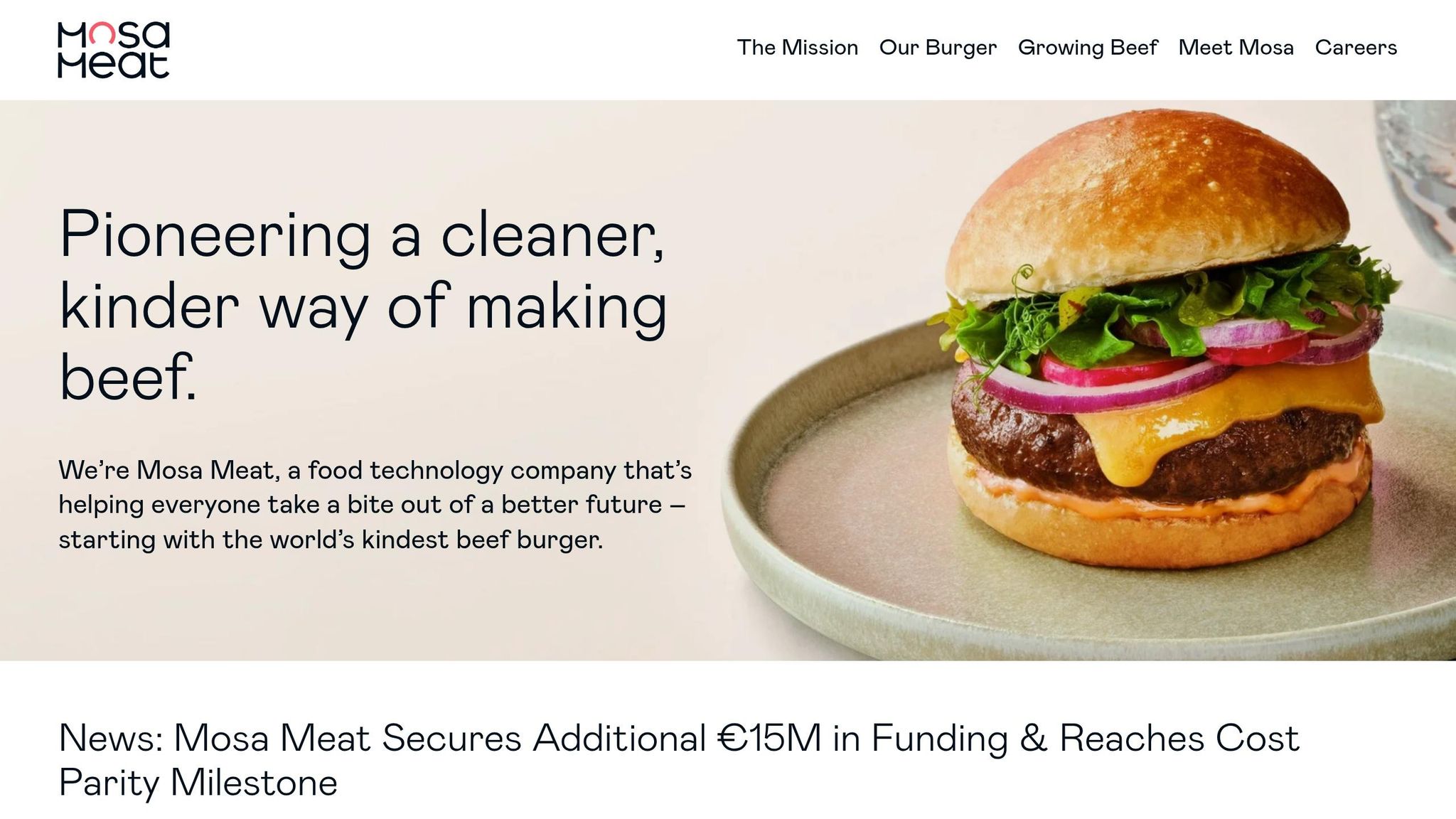
In August 2013, Mark Post made history at a press conference in London by cooking and presenting the world's first cultivated meat burger. This groundbreaking patty, created from 20,000 muscle strands grown from cow cells, came with a hefty price tag of €250,000. The project was funded by Google co-founder Sergey Brin and marked a pivotal moment in food innovation. Experts tasted it live, introducing the world to the concept of cultivated meat [14][15].
Mark Post, a medical doctor and Professor of Vascular Physiology at Maastricht University, initially used tissue engineering to grow vascular grafts for medical purposes. However, he saw the potential to apply this science to address pressing global issues. Traditional meat production consumes 80% of agricultural land and contributes roughly 20% of human-induced greenhouse gas emissions [12]. His co-founder, Peter Verstrate, brought over two decades of experience from the conventional meat industry and a determination to drive change from within [11]. Together, they transformed scientific innovation into a cost-effective solution for the future of food.
"We slid the cultivated burger into a heated pan and had two independent people eat it while the world watched. That burger cost €250,000. Now, we are 99.999% cheaper - we make one burger for around €2.50." - Peter Verstrate, Co-founder and COO, Mosa Meat [16]
Since its founding in 2016, Mosa Meat has tackled some of the industry's toughest challenges. They developed a completely animal-free, serum-free growth medium and perfected methods to grow cultivated fat alongside muscle tissue, ensuring the flavour profiles closely match real beef [12][15]. By 2023, the company achieved two major milestones: earning B Corp Certification and opening the largest cultivated meat campus in the world, located in Maastricht, Netherlands [13].
In March 2025, Mosa Meat took another significant step by being selected for the UK's regulatory sandbox for cultivated meat, a programme designed to facilitate market entry. Just two months later, in May 2025, they submitted a full market authorisation request to UK regulators. Consumer interest is also growing, with over half of Europeans surveyed expressing a willingness to try cultivated meat once it becomes available in shops [13][16]. These advancements highlight the potential of cultivated meat to reshape the food industry, moving away from traditional livestock farming.
What sets Mosa Meat apart is their dedication to replicating the taste, texture, and overall experience of conventional meat. This commitment ensures that making the switch to cultivated meat feels seamless and appealing.
"If cultivated meat doesn't match the experience of real meat, it won't have the impact we're aiming for." - Peter Verstrate, Co-founder and COO, Mosa Meat [16]
5. David Bell – Cultivated Meat Shop
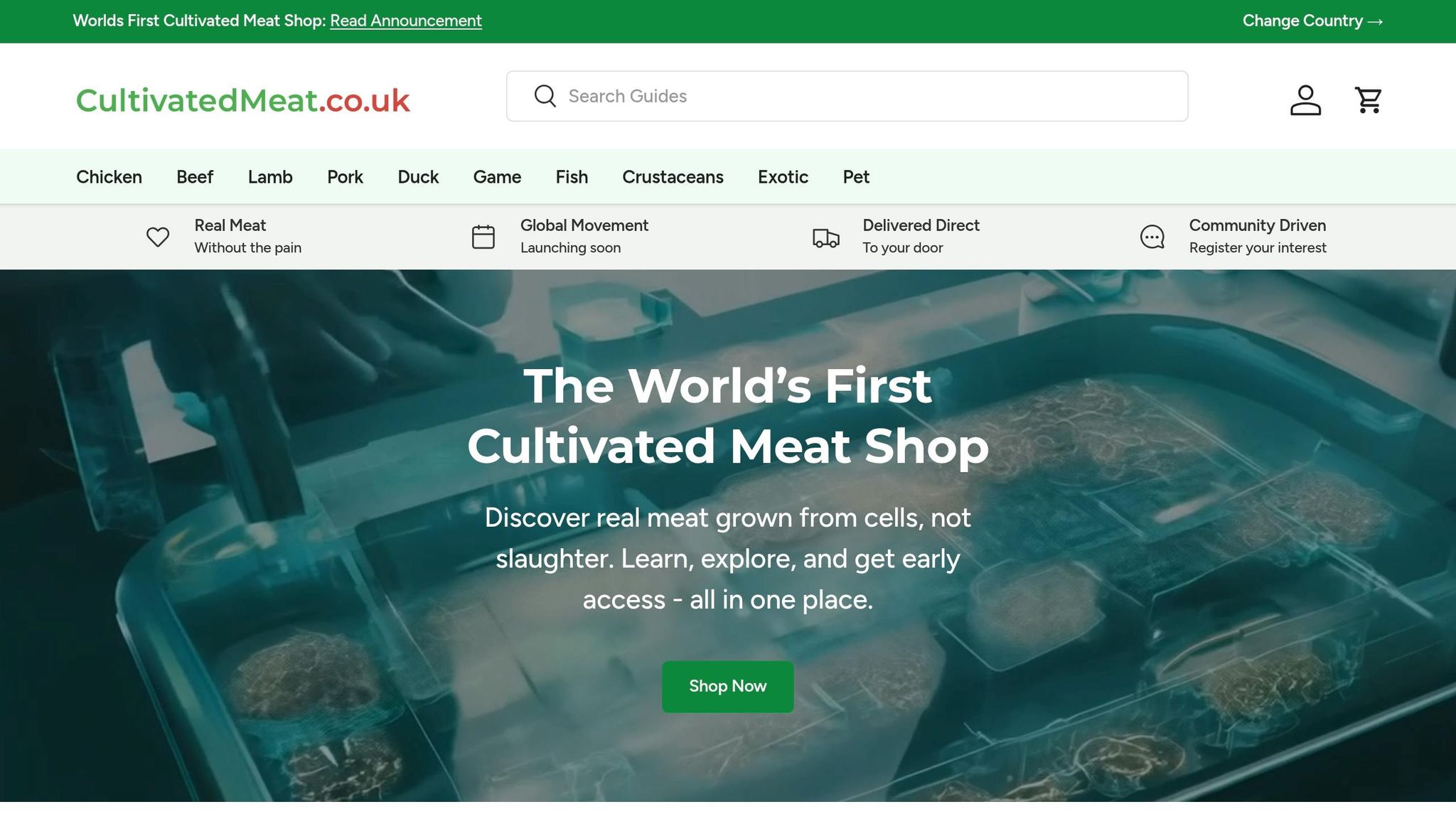
David Bell isn’t waiting for cultivated meat to hit store shelves - he’s already preparing consumers for the shift. A seasoned tech entrepreneur and vegan since 2012 [18], Bell recognised early on that the success of cultivated meat wouldn’t just rely on production breakthroughs but also on consumer understanding and trust. To address this, he launched the Cultivated Meat Shop, a platform designed to educate and engage consumers well before cultivated meat becomes widely available.
"Everything starts before it's ready. Waiting until products are on the shelf means playing catch-up." - David Bell, Founder, Cultigen Group [18]
While figures like Mark Post and Uma Valeti focus on production, Bell has carved out a niche by addressing consumer readiness. His platform offers a range of resources, including educational guides, industry updates, interactive timelines, and waitlist sign-ups. Importantly, this information is presented in an accessible way, avoiding overly technical language. With nearly half of UK consumers aged 16–34 already shifting towards more sustainable meat alternatives [17], Bell is helping build the informed audience the industry will need to thrive.
Bell’s ambitions extend far beyond the UK. Through his company, Cultigen Group, he has secured domain names across 18 European countries in anticipation of regulatory approvals [18]. His forward-thinking approach was spotlighted by Green Queen in June 2025, which highlighted the platform’s expansion across Europe and its efforts to establish cold chain delivery partnerships - laying the groundwork for a seamless supply chain before the demand even peaks [18]. Reflecting on his journey, Bell shared:
"It's exciting to envisage a future in which anyone can eat meat, whilst maintaining the morals around animal cruelty which first shifted my focus all those years ago." - David Bell, Founder, Cultigen Group [18]
Comparison Table
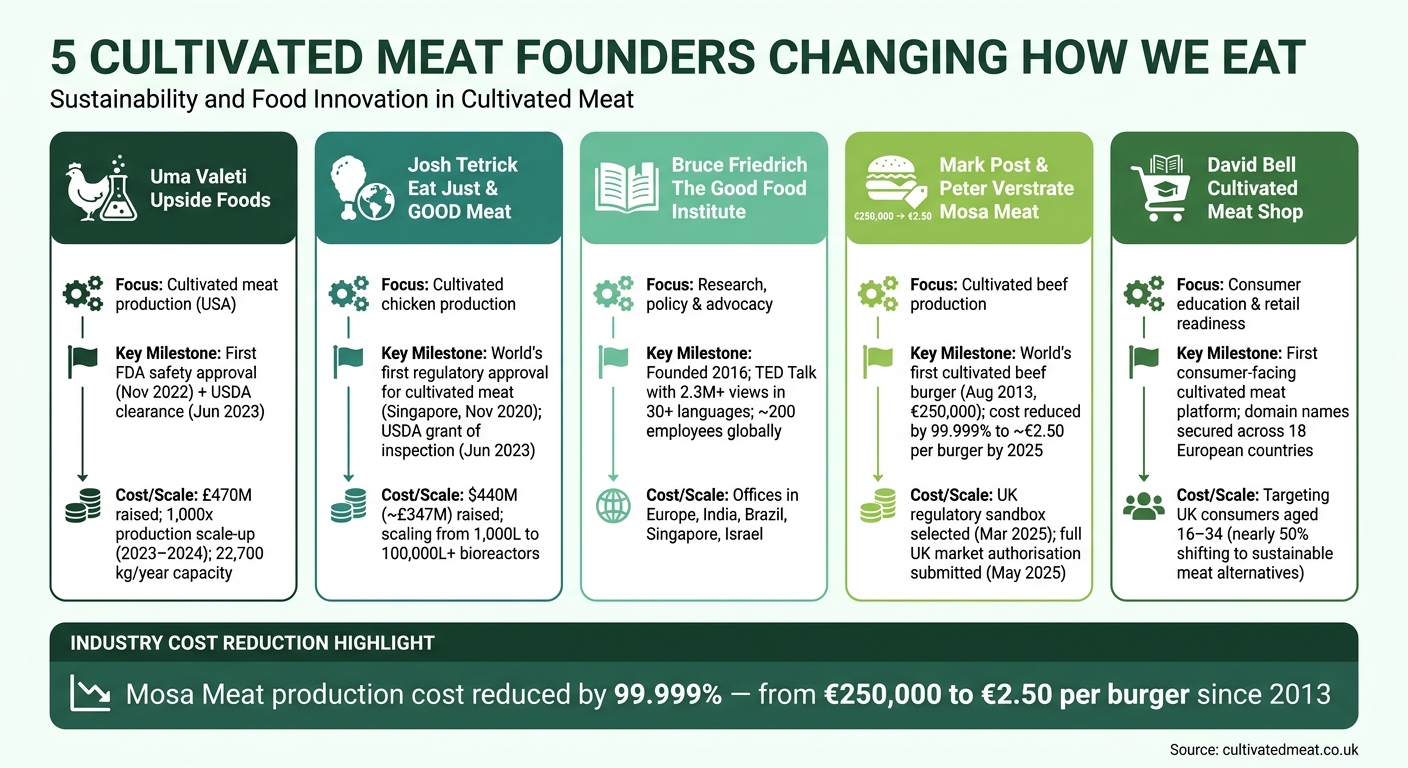
5 Cultivated Meat Founders: Key Contributions & Milestones
The table below highlights the distinct contributions each founder has made to the world of cultivated meat.
| Founder(s) | Organisation | Primary Focus | Key Contribution | Main Consumer Benefit |
|---|---|---|---|---|
| Uma Valeti | Upside Foods | cultivated meat production | Pioneering large-scale production of cultivated meat in the US | Experience real meat without the need for animal slaughter |
| Josh Tetrick | Eat Just / Good Meat | Cultivated chicken production | Innovating ethical and sustainable protein alternatives through cultivated meat | Opening the door to slaughter-free chicken |
| Bruce Friedrich | The Good Food Institute (GFI) | Research and policy advocacy | Promoting industry-wide research and regulatory advancements | Supporting a safer and more sustainable food ecosystem |
| Mark Post & Peter Verstrate | Mosa Meat | Cultivated beef production | Developed the first cultivated beef burger (€250,000, 2013) and drastically reduced costs by 99.999% by 2025 [1] | Affordable cultivated beef nearing commercial viability |
| David Bell | Cultivated Meat Shop | consumer education and retail readiness | Introduced the first consumer-focused platform for cultivated meat | A go-to source for understanding and preparing for cultivated meat |
This table showcases how each founder contributes to the broader mission of transforming the meat industry. From production breakthroughs to consumer education and policy advocacy, their efforts collectively shape a future where cultivated meat can thrive as a practical and ethical choice.
Conclusion
The five visionaries highlighted here - Uma Valeti, Josh Tetrick, Bruce Friedrich, Peter Verstrate and Mark Post, and David Bell - are spearheading a transformation in an industry historically tied to conventional meat production.
Their combined efforts are already making waves: production costs have plummeted, regulatory frameworks are advancing, and public awareness is steadily increasing. Maarten Bosch, CEO of Mosa Meat, captures this progress perfectly:
"Today, through fundamental scientific breakthroughs and scaling efficiencies, we are producing burgers at a price point ready for restaurant menus." [1]
Their work is not just about improving production methods - it’s also reshaping the regulatory and consumer landscape. For those in the UK, the future looks particularly exciting. The country is quickly establishing itself as a leader in cultivated meat, with new production facilities in the works and regulatory backing expected to make commercial products available by 2027 [2]. This progress is part of a wider cultivated meat industry roundup showing global momentum.
Imagine real meat, produced without the need for slaughter and with a fraction of the environmental impact. That’s the shared vision these pioneers are working towards. As Connor Duffy, Investment Manager at the Clean Growth Fund, puts it:
"Rethinking how we produce protein is an essential part of tackling the climate crisis." [2]
Want to learn more about how cultivated meat could change what's on your plate and its benefits for the planet? Head over to Cultivated Meat Shop for straightforward insights and early access sign-ups. Stay informed as the UK market gears up for this exciting new chapter in food innovation.
FAQs
Is cultivated meat safe to eat?
Cultivated meat has been deemed safe for consumption and is overseen by regulatory bodies such as the FDA and USDA. Research indicates that it carries fewer contamination risks compared to traditional meat, providing consumers with a cleaner, more controlled option.
When will cultivated meat be sold in UK shops?
Cultivated meat could appear on UK shop shelves within the next five years, pending necessary safety evaluations and regulatory approvals. Several products are already undergoing these checks, signalling progress towards making cultivated meat more accessible in the near future.
Will cultivated meat taste the same as conventional meat?
Cultivated meat offers a nutritional profile comparable to that of conventional meat. However, perfecting its taste and texture remains a work in progress. Although early research shows encouraging results, there may still be subtle differences until these products are fully refined and more broadly accessible.


